
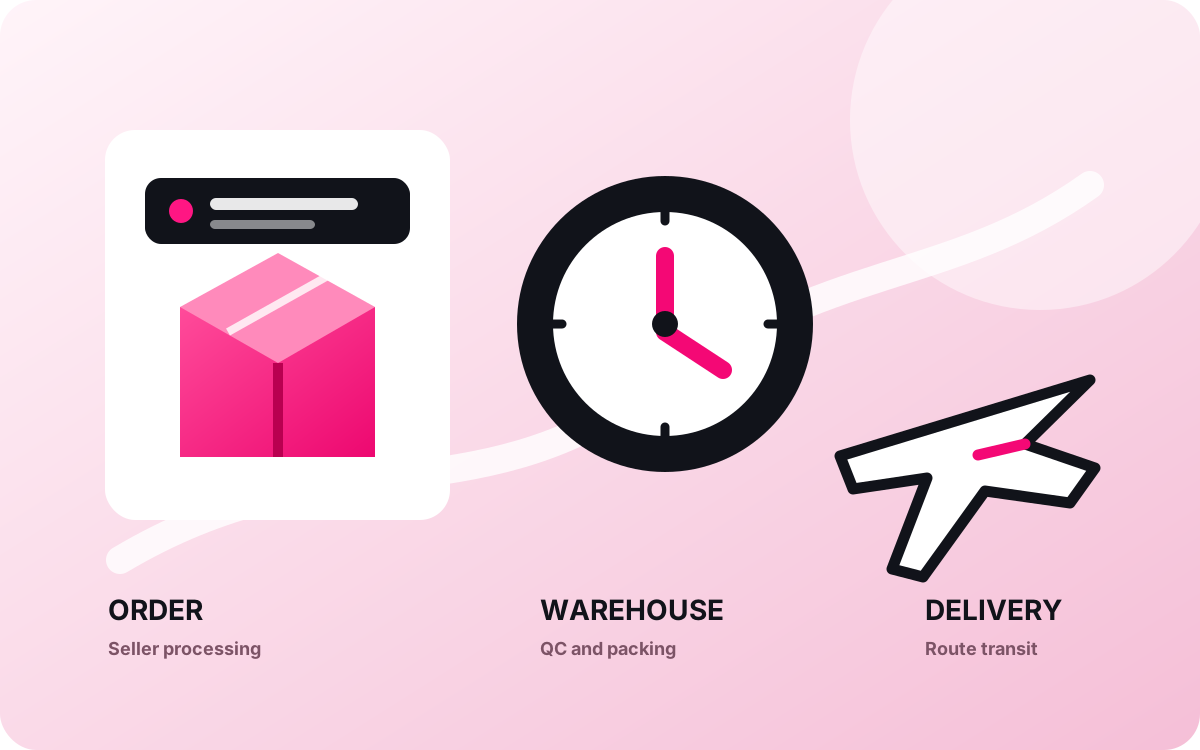
People searching “how long does OOPBuy take?” are usually mixing two different trips. First, a marketplace seller sends the item to OOPBuy’s warehouse in China. Second, after you approve the item and submit a parcel, an international carrier moves it to your address. OOPBuy shipping time therefore starts before the international tracking number exists.
The timeline also belongs to several parties. The marketplace seller controls stock and domestic dispatch. The warehouse receives, identifies, photographs and stores the item. You control how quickly QC is reviewed and whether the parcel is submitted. The international carrier, customs and final-mile network control the last leg. A delay in one stage cannot always be solved by changing another.
Stage 1: purchase confirmation and seller processing
After a product link and variation are submitted, the order must be checked and purchased. For a normal in-stock listing, use zero to two business days as a planning range for purchase handling. A variation mismatch, unclear note, price change, restricted-product warning or out-of-stock message can pause the order until you respond.
Seller processing begins after the marketplace order is placed. Some sellers dispatch quickly; others publish several days of handling time. Pre-sale, made-to-order and deposit listings can take weeks. This is why the status “purchased” should not be read as “already moving to the warehouse.” Check the original listing, the seller’s estimated dispatch date and any message attached to the order.
A practical planning range for an ordinary in-stock seller is two to seven days before warehouse arrival, including domestic transport. Treat that as a budgeting assumption, not an OOPBuy guarantee. Chinese holidays, sales events, weather and seller stock errors can extend it.
Stage 2: domestic shipping to the warehouse
Once the seller supplies a domestic tracking number, the parcel moves inside China. The important timestamps are seller handoff, first carrier scan, warehouse delivery and warehouse check-in. A tracking number with no scan may mean that a label was created before the carrier received the parcel.
Domestic delivery commonly fits inside a few days, but distance and carrier service vary. If tracking shows delivered and the item is not yet stocked, allow time for warehouse intake. Large receiving volumes, an unreadable label or a parcel containing multiple orders can delay matching. Contact support with the order number and domestic tracking only after checking that the delivery scan belongs to the correct warehouse address.
Stage 3: warehouse check-in and QC photos
Warehouse arrival is not the same as QC completion. Staff must identify the item, connect it to your account, perform the published inspection process and upload photographs. One to three business days is a sensible planning range for a straightforward item, with extra time for peak periods or exceptions.
Review photographs as soon as they appear. Confirm the color, size label, visible condition, quantity and obvious construction details. If a decision-critical area is missing, request a precise additional photo instead of waiting without a plan. A return or exchange request may depend on a short seller window, so the buyer’s own response time matters.
If you order ten items from different sellers, the parcel cannot be ready until the slowest item is accepted or removed. Record each item’s seller dispatch, warehouse arrival and QC decision in your OOPBuy spreadsheet. That immediately shows whether the delay belongs to one listing or to the entire haul.
Stage 4: parcel submission and packing
After all accepted items are ready, select the contents, destination, packing options and preferred route. Allow roughly one to three business days for ordinary parcel processing. Rehearsal packing, measurements, extra protection, box removal, vacuum packing or an address question can add time because the warehouse must perform and verify the requested work.
Do not wait until a deadline to submit a parcel. Free-storage periods and promotion end dates are poor substitutes for a shipping plan. Resolve missing QC, restricted-item eligibility and declaration details before clicking submit. A parcel that must be unpacked and corrected loses more time than one prepared carefully.
Stage 5: international shipping and delivery
The route shown at parcel checkout should be your main source for an estimated transit window. As a broad planning framework, express services may target about five to twelve business days, many standard lines about seven to twenty business days, and slower economy options about fifteen to thirty or more. These are category-level ranges, not promises for a particular OOPBuy line.
Transit usually includes export processing, international movement, import customs and final-mile delivery. Tracking can be quiet between carrier handoffs. “Electronic information received” often means a label exists; it does not prove that the parcel has left the warehouse. A destination scan is stronger evidence that the final-mile network has received it.
Count business days when the route does, and distinguish them from calendar days. Weekends, national holidays and peak seasons can produce long-looking gaps even when the parcel remains inside the carrier’s stated range.
What makes OOPBuy delivery take longer?
- Pre-sale or low-stock listings: the seller has not produced or dispatched the exact variation.
- Order exceptions: a price change, missing option or restricted-product warning needs a buyer decision.
- Warehouse peaks: major sales and holidays increase receiving, QC and packing volume.
- Mixed or sensitive goods: batteries, liquids, magnets and other restricted categories can limit routes or require parcel changes.
- Customs review: authorities may request information or inspect a parcel; the agent cannot guarantee clearance time.
- Tracking handoffs: one carrier may move the parcel before a destination carrier produces a visible scan.
- Address or payment problems: incomplete information can stop packing or final delivery.
How to read the tracking timeline correctly
Use the order record while the item is traveling from seller to warehouse. Use the parcel record after international submission. These are different tracking objects. Searching the international number while the seller is still dispatching the item will not explain the delay.
Create a simple escalation rule. Compare the last scan with the route’s published estimate, add the date and status to your record, then contact the correct party with the parcel number and screenshot. Ask a narrow question such as “Has the carrier physically collected parcel X?” rather than “Where is my order?” Precise questions produce more useful answers.
How to reduce avoidable delays
Choose in-stock listings with clear variations. Avoid mixing a time-sensitive parcel with a pre-sale item. Review QC on arrival, decide returns immediately, and request extra photos with exact instructions. Confirm route eligibility before purchasing restricted categories. Keep the shipping address consistent and complete. Finally, choose a route for reliability and fit, not only for the lowest displayed price.
None of these steps controls weather or customs, but they remove the delays created by ambiguous orders and slow buyer decisions. That is the realistic way to make OOPBuy shipping faster.
Frequently asked questions
How long does OOPBuy take in total?
A useful planning window is roughly two to six weeks from purchase request to delivery. The seller, warehouse, chosen line, customs and destination carrier determine the actual result.
Why is my order purchased but not shipped?
The marketplace seller may still be preparing it, waiting for stock or handling a pre-sale. Check the seller estimate and order messages before treating it as an international delay.
How long does OOPBuy warehouse QC take?
Use one to three business days as a planning range for a straightforward receipt, while allowing more time for peaks or exceptions.
Can OOPBuy guarantee a delivery date?
No. Carrier handoffs, customs, weather, peak volume and address problems can change any estimate.